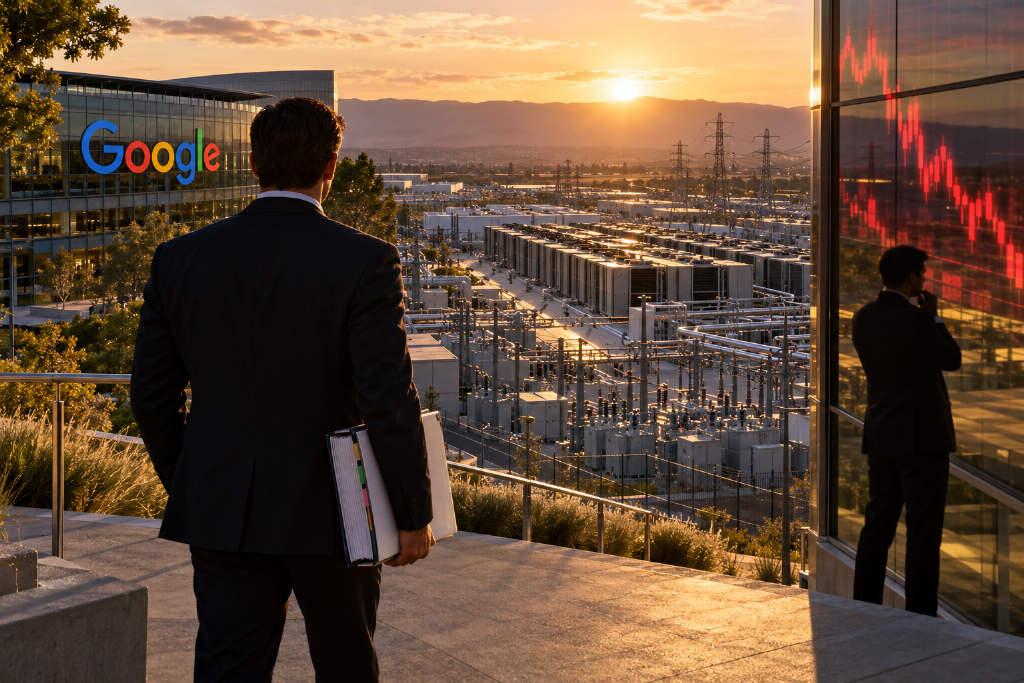
Alphabet2026-10-29 15:58:23Alphabet filing shows AI-related exposure topping $1 trillionAlphabet disclosed in a quarterly filing that demand for its cloud services is rising quickly, reflected in a larger backlog of unfulfilled cloud contracts. The filing also showed that more than one-third of the quarter’s backlog growth came from a joint venture in which Alphabet holds a stake. Beyond the more than $1 trillion in purchase commitments, future lease payments and other obligations previously discussed by the company’s CFO on the earnings call, the document listed about $98.5 billion in contingent commitments that Alphabet could be required to assume under certain conditions. That figure was up by roughly $23 billion from the prior quarter. The commitments include guarantees for data center lease payments, support for partners buying electrical equipment, and potential obligations to repurchase AI chip systems from customers in specific cases. According to MSX.COM data, GOOG fell as much as 13% after the U.S. market open before narrowing its loss to 11.56%. Alphabet had earlier reported third-quarter revenue of $127.58 billion, up 25% year over year but below the $127.91 billion market expectation, while adjusted EPS came in at $2.67 versus an expected $2.97.720
Anthropic2026-09-27 13:06:33WSJ: Senior Anthropic staff weigh remote land purchases over AI runaway fearsAccording to The Wall Street Journal, some senior employees at Anthropic are considering buying land in remote parts of the United States as a fallback shelter in case artificial intelligence spins out of control. The report says the idea is tied to concerns over AI risk rather than a routine real-estate decision. It also traces Anthropic’s deep links to the effective altruism movement and to a Bay Area network of “doomers” that has spent more than a decade gaming out end-of-the-world scenarios. The item was cited by Techub News, which attributed the report to The Wall Street Journal, with The Decoder named in the source line.630
AI risk2026-09-21 01:42:22AI exposure spreads across asset classes, forcing pension and sovereign funds to rethink diversificationArtificial intelligence exposure is no longer confined to large-cap technology stocks, according to the BlockBeats digest. The report says the AI wave is starting to disrupt the traditional diversification logic used by pension funds and sovereign wealth funds, with risks now extending into private equity, corporate bonds, and infrastructure. Institutional investors are re-examining portfolio-wide AI exposure rather than looking at single asset buckets in isolation. Goldman Sachs estimates that companies tied to AI infrastructure account for about 40% of the S&P 500’s total market capitalization. Apollo data shows AI-linked issuance has made up nearly half of this year’s investment-grade bond issuance and 87% of venture capital funding. The report also notes that New York City Retirement Systems CIO Monte Tarbox recently declined a fundraising request from a private fund because its AI holdings were too concentrated. A major problem for large allocators is the lack of a unified standard for measuring AI exposure. LACERA estimates that 8% to 19% of its holdings are AI-related, while an Invesco survey of 90 sovereign wealth funds found that more than half ranked market concentration as the top risk in AI investing. Some institutions are now adopting a total portfolio approach, or TPA, to track AI exposure and cross-asset correlations across equities, bonds, private markets, and infrastructure.1420
Bitcoin ETF2026-09-01 01:58:45Bitcoin ETF inflows snap after nine days as Ether funds keep gaining; Bailey warns AI could trigger a financial shockCrypto markets spent the past 24 hours balancing ETF flow data, shifting rate expectations and a fresh batch of regulatory and infrastructure developments. U.S. spot Bitcoin ETFs posted $201.9 million in net outflows on Aug. 28, ending a nine-session inflow streak that began in mid-August. Spot Ether ETFs moved the other way, taking in $102.1 million that day and stretching their run of positive flows to 10 straight sessions. According to SoSoValue, weekly flows still remained strong for both products, with Bitcoin funds adding $924 million over the Aug. 24-28 trading week and Ether funds bringing in $824 million. Macro pressure also remained in focus. Bitcoin held near $78,000 while the dollar strengthened and the yen slipped through 160 against the U.S. dollar. Ahead of Friday’s U.S. nonfarm payrolls report, CME FedWatch data showed traders assigning better-than-even odds to two Fed rate hikes this year. In parallel, Bank of England Governor Andrew Bailey warned G20 finance officials that frontier AI models could magnify cyber risks and expose already stretched financial markets to more severe disruptions. Elsewhere, Ireland moved to exclude crypto from a planned tax-advantaged investment account, Japan’s Financial Services Agency proposed easing reporting rules for trust-based stablecoins from fiscal 2027, and several market structure stories landed at once, from DTCC’s tokenization timeline and CME’s new crypto indexes to exchange inflows, venture financing, and fresh security incidents on Fogo and Cronos.1780
Bill Gates2026-08-27 03:24:56Bill Gates backs Dario Amodei and calls for mandatory oversight of high-risk AI capabilitiesBill Gates publicly backed Anthropic CEO Dario Amodei, arguing that criticism has been aimed at one of the few people willing to speak openly about AI’s downside risks. Gates said recent advances in artificial intelligence have moved far beyond what he expected, adding that after closely studying Claude Code this year, even programming — the field he knows best — left him stunned. He said many AI systems are already better than him in a number of areas. Gates warned that AI could sweep across industries and trigger large-scale job losses. He also pointed to a more severe scenario: a small number of people using advanced AI to design new pathogens. Amodei has spent years publicly warning about AI risks and, this year, reportedly clashed openly with the Pentagon over limits on using Claude for mass domestic surveillance and fully autonomous weapons without reliable safeguards. Gates said those warnings have also strained Amodei’s relationships with the White House and parts of the tech sector. Gates went on to criticize the broader AI industry, saying people who understand the technology are privately "very worried" but many executives avoid saying so in public while chasing financing for "the next trillion dollars." He said domestic and international AI regulatory systems are needed, along with mandatory reviews for capabilities that could be used to create new pathogens, human-reserved job categories, and taxes on AI tokens and robots.1240
SpaceX2026-07-23 21:25:15SpaceX Lost $600 Billion in 3 Days, Nearly Half of Bitcoin’s Market CapSpaceX stock plunged 23% in three trading sessions, wiping out over $600 billion in value — roughly half of Bitcoin's $1.3 trillion market cap. Bitcoin barely budged, down less than 1%.710
Federal Reser2026-07-23 04:25:14Fed Survey: AI Risk Recognition Surges to 50% Amid Debt Leverage and Labor ConcernsThe Fed's latest Financial Stability Report shows 50% of surveyed market participants now flag AI as a potential shock, up from 30% last fall. Debt-funded AI spending, private credit strains, and labor market weakness emerge as key risk channels.930
Jim Rogers2026-07-10 16:13:13Veteran Investor Jim Rogers Declares US Stock Market Peak, Prepares to ShortLegendary investor Jim Rogers warns that the US stock market has peaked after the longest bull run since 2009, plans to short equities, and urges caution on AI investments.870